How Much Does a Tesla Sunshade Actually Lower Cabin Heat?
By WattCabin · 7 min read · Updated June 2026
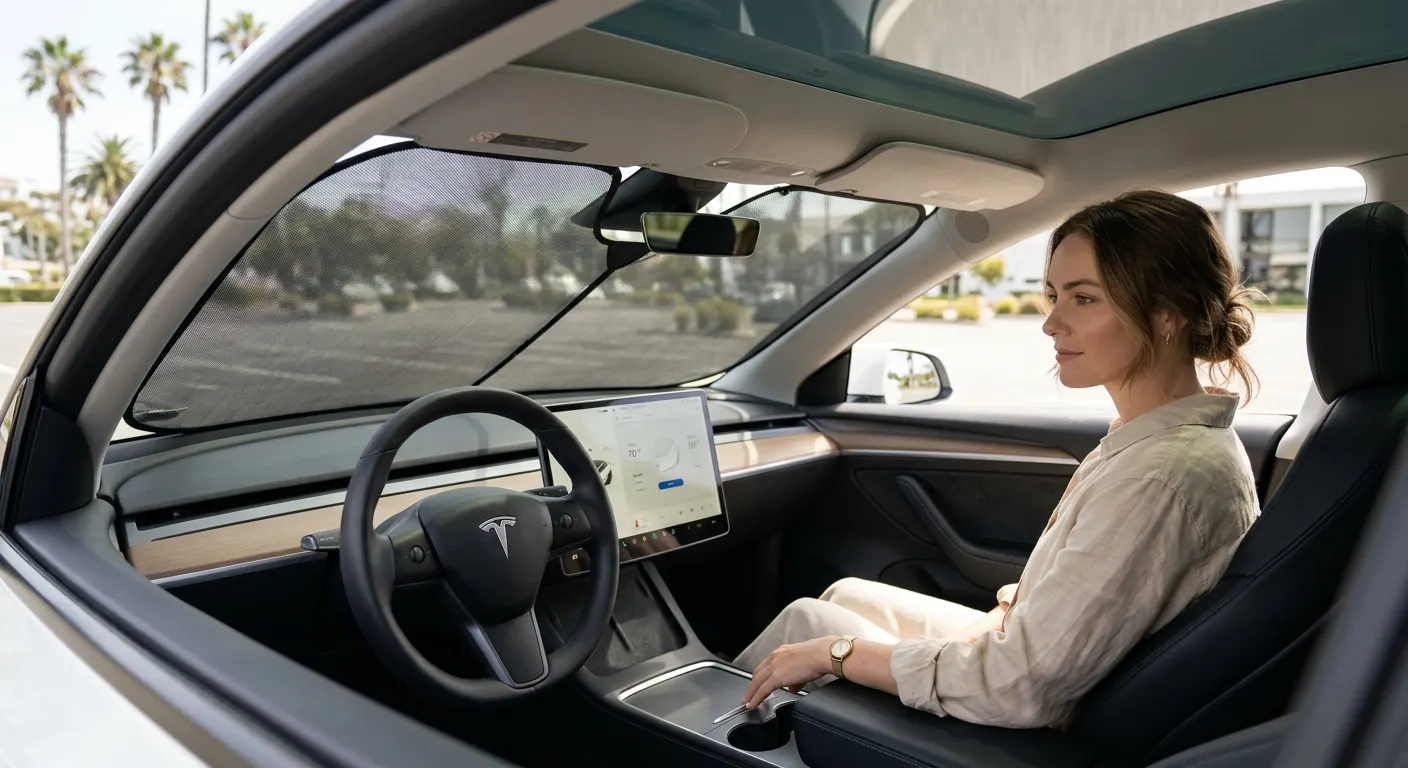
A glass roof is one of the best things about a Tesla in most conditions and one of the hardest things to manage on a hot, sunny day. The large expanse of glass lets solar heat pour into the cabin, and the standard UV coating built into Tesla glass helps with UV but does not stop all infrared heat gain. A fitted sunshade can make a meaningful difference; owners in hot climates consistently report a noticeably cooler cabin on arrival and less air-conditioning load during the drive. This guide explains what a shade does, what it does not do, and which catalog options to look at for a Model 3 or Model Y.
Quick answer
A good shade makes a real difference, especially when parked: owners report a cooler headliner, less radiant heat, and faster cool-down. Reflective multi-layer shades reject far more heat than mesh. It will not air-condition the car or block window glare. Buy a shade cut for your specific model and pair it with preconditioning for the most benefit.
This guide contains affiliate links. WattCabin may earn a commission at no cost to you.
The glass roof heat problem
Tesla glass roofs have built-in UV and infrared coating, but they are still a large panel of glass above your head that the sun shines through directly. On a hot day parked in the sun, the interior can become uncomfortably hot before you even open the door, and once you are driving, direct solar radiation through the roof raises the surface temperature of the headliner and seats above what the air conditioning alone addresses quickly.
The heat you feel on your head and shoulders during a summer drive is mostly radiant heat: energy coming directly from the heated glass and headliner above you, not just warm air. Air conditioning cools the air but takes longer to cool radiating surfaces. A shade addresses the radiant source directly.
Tesla's Cabin Overheat Protection feature keeps the cabin from baking to dangerous levels when parked, but it uses the battery to do it. A sunshade reduces the heat load in the first place, which reduces how hard the system has to work.
What a sunshade actually does
A sunshade installed over the glass roof sits between the glass and the interior headliner. It intercepts solar energy before it reaches the headliner surface and converts to radiant heat. A reflective or multi-layer shade sends a large share of that energy back out through the glass rather than absorbing it.
The practical result is a cooler headliner, lower radiant heat on occupants, and less work for the air conditioning, which can translate to a modest range improvement on hot days. The difference is most noticeable immediately after getting into a car that has been parked in direct sun; a car with a shade reaches a comfortable interior temperature faster than one without.
What a shade does not do: it does not air-condition the car, eliminate heat from the front windshield and side windows, or fully prevent a hot interior if you park in direct sun all day. It is one layer of a complete approach that also includes Cabin Overheat Protection and preconditioning.
Reflective versus mesh shades
The two main shade types are reflective multi-layer designs and mesh designs. They behave differently and suit different priorities.
Reflective shades, typically a honeycomb or aluminum-layer outer surface, bounce incoming solar energy back through the glass rather than absorbing it. They reject substantially more heat than mesh alternatives. The VION Glass Roof Sunshade is a multi-layer reflective design that blocks approximately 95 percent of UV and makes a real dent in cabin temperature on hot days. The visible trade-off is that the reflective surface is visible from outside the car.
The Tesery Dual-Layer Glass Roof Sunshade uses a reflective honeycomb outer layer with a tool-free clip-in installation that takes a few minutes. It is well-suited to owners who want high heat rejection and easy daily use. For those who prefer a less visible, airy look with diffused light rather than maximum heat blocking, the OEM-Style Mesh Glass Roof Sunshade is lighter and less expensive but does less against serious summer heat.
Model S and Model X owners need a different, larger shade set. The Tesloid Panoramic Roof Sunshade (Model S/X) is a multi-panel set sized for the bigger S and X panoramic glass area.

VION Glass Roof Sunshade
UPF 50+ shade blocking 95% of UV with multi-layer insulation that meaningfully drops cabin heat.
Tesery Dual-Layer Glass Roof Sunshade
Honeycomb reflective outer layer bounces infrared and UV away; tool-free, adhesive-free install in minutes.
OEM-Style Mesh Glass Roof Sunshade
Lightweight collapsible mesh shade with a rigid frame that clips to the roof for an OEM-clean look.
Tesloid Panoramic Roof Sunshade (Model S/X)
Multi-panel sunshade set sized for the larger Model S and Model X panoramic glass roof areas.
Clip-in versus magnetic attachment
Most quality sunshades use a tension-fit or clip-in design that grips the roof channels without adhesive or tools. This is the most common and generally the most reliable attachment method: the shade holds position without sagging and comes out cleanly when you want to remove it.
Magnetic attachment options exist but typically have fewer contact points and can shift over time, particularly in a car that sees a lot of in-and-out use. A rigid or semi-rigid shade structure matters more than the attachment type: a floppy mesh will sag regardless of how it attaches.
The practical rule for selection: choose a shade listed for your specific model. The Model 3 and Model Y have different roof dimensions and curvature, so a shade cut for the Model Y will not fit a Model 3. This is the same model-specificity principle as floor mats and mud flaps. Check that the listing names your car before buying.
Getting the most out of a shade
The largest benefit of a sunshade is when the car is parked. Fitting the shade when you arrive at a parking spot and removing it before you drive is the ideal use pattern: it prevents the interior from heat-soaking in the first place, which is faster and cheaper than preconditioning a hot car.
On the road, the shade reduces ongoing radiant heat, but the main comfort action moves to the air conditioning. The combination works best: shade reduces the heat load, air conditioning manages the air temperature. Owners who pair a good shade with the built-in preconditioning feature, using the app to start cooling before they return to the car, report the most dramatic improvement in summer comfort.
Keep the shade clean and check that it is fully seated in the roof channels after removal and reinstallation. A shade that has shifted and gaps at one edge lets in the heat you bought it to block. Wipe the surface occasionally with a microfiber towel to keep it free of the dust and salt film that gradually reduces reflectivity.

Tesla-Friendly Microfiber Detailing Towel Pack
Soft, scratch-free microfiber towels for wiping down the touchscreen, piano-black trim, and glossy console.
Featured in this guide
VION Glass Roof Sunshade
UPF 50+ shade blocking 95% of UV with multi-layer insulation that meaningfully drops cabin heat.
Tesery Dual-Layer Glass Roof Sunshade
Honeycomb reflective outer layer bounces infrared and UV away; tool-free, adhesive-free install in minutes.
OEM-Style Mesh Glass Roof Sunshade
Lightweight collapsible mesh shade with a rigid frame that clips to the roof for an OEM-clean look.
Tesloid Panoramic Roof Sunshade (Model S/X)
Multi-panel sunshade set sized for the larger Model S and Model X panoramic glass roof areas.
Tesla-Friendly Microfiber Detailing Towel Pack
Soft, scratch-free microfiber towels for wiping down the touchscreen, piano-black trim, and glossy console.
Keep reading
Related comparisons
Related roundups
FAQ
Frequently asked questions
Does a Tesla sunshade actually make the cabin cooler?+
Yes, a good one makes a real and noticeable difference, particularly when the car has been parked in direct sun. Owners in hot climates consistently report a cooler headliner, less radiant heat on the head and shoulders, and faster cabin cool-down after fitting a quality shade. The benefit is largest when the shade is used while parked, preventing the interior from heat-soaking in the first place.
What is the difference between a reflective shade and a mesh shade?+
Reflective shades, those with an aluminum or honeycomb outer surface, bounce solar energy back through the glass rather than absorbing it. They reject substantially more heat than mesh alternatives. Mesh shades diffuse light and keep a lighter, more open look but let considerably more heat through. For serious summer heat in a hot climate, a reflective multi-layer shade is the more effective choice. Mesh works well for glare diffusion in milder conditions.
Will one sunshade fit both the Model 3 and Model Y?+
No. The Model 3 and Model Y have different glass-roof dimensions and curvature, so shades are cut per model. A shade designed for the Model Y will sag or leave gaps in a Model 3. Model S and Model X panoramic roofs are larger still and need their own multi-panel set. Always confirm the listing names your specific car before buying.